
The fall in total reserves was mainly because of a decline in foreign currency assets worth $4.5 billion, the data showed.

Investors pumped in a record Rs 40,608 crore into equity mutual funds in June, 17 per cent higher than in May 2024, industry body Amfi said on Tuesday. The flows into the systematic investment plans (SIPs) also reached a new high at Rs 21,262 crore for the month, which was higher than the previous high of Rs 20,904 crore recorded in May, it said. The net assets under management (AUM) for the entire MF industry on equity schemes stood at Rs 27.67 lakh crore, while the same from SIPs was Rs 12.43 lakh crore, the body said.
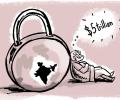
The wait for India to become a $5-trillion economic powerhouse by 2024-25 (FY25) is going to take longer than what the finance ministry had originally intended, according to the International Monetary Fund (IMF). The vision will instead be achieved in 2028-29 (FY29), reveals the IMF data, illustrating a four-year delay. Chief Economic Advisor (CEA) V Anantha Nageswaran had in February said India would become a $5-trillion economy by 2025-26 or the following year, on the back of 8-9 per cent sustained growth rate in real gross domestic product (GDP). However, the IMF data conveys that the economy will be $4.92 trillion in FY28, clearly alluding to the fact that the target will be realised in FY29.

Gold is an excellent asset class for diversification and should be included in all long-term portfolios.

The Budget should use the extra RBI surplus to better effect, suggests A K Bhattacharya.

IC 814: The Kandahar Hijack begins by asking why the hijack lasted seven days and ends in wondering if the good guys fought the bad ones hard enough, observes Sukanya Verma.
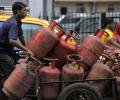
No immediate comment was available from airlines on the impact of the price hike on passenger fares.

Reserve Bank governor Shaktikanta Das on Friday cautioned banks against any build-up of asset-liability mismatches, saying both are detrimental to financial stability and hinted that the ongoing crisis in the US banking system seems to have emanated from such mismatches. Delivering the annual KP Hormis (Federal Bank founder) commemorative lecture in Kochi this evening, the governor was quick to acknowledge and assure that the domestic financial sector is stable and the worst of inflation is behind us. Amid the continuing volatility in exchange rates, especially due to the excessive appreciation of the US dollar, and its impact on the external debt servicing ability of nations, Das said, "We have nothing to fear as our external debt is manageable and thus appreciation of the greenback does not pose any problem to us."

'If equities perform well in a year, withdraw money from equities. If the equity market is down, shift withdrawal to the debt portion.'

Market benchmarks Sensex and Nifty wilted under selling pressure on Friday after a five-day rally as investors pared exposure to banking, financial and consumer durable stocks amid mixed trends in global markets. Rising global crude prices, a depreciating rupee and persistent foreign fund outflows further weighed on sentiment, traders said.

The new Samvat 2080 is viewed as a year of hope for industrial and precious metals. A key reason is the expectation of US interest rates peaking, followed by a reduction in the coming months. Regarding crude oil, its trajectory depends more on how the situation unfolds in West Asia.

After three cheetahs died in just over a month last year in Madhya Pradesh's Kuno National Park, the National Tiger Conservation Authority in May 2023 called in experts from Reliance's wildlife facility in Gujarat to review health monitoring protocols, official records show.

Jet fuel (ATF) rates were on slashed by a steep 12.5 per cent, the sixth straight reduction in prices since August, as international oil prices slumped to five-year low levels.

After an extremely stable 2023, the Indian rupee started 2024 on a promising note and has turned out to be the best-performing Asian currency so far in January, appreciating 0.1 per cent despite 2 per cent rise in the dollar index. All other Asian currencies depreciated by around 1.4-4 per cent during the month. The local currency regained its ground against the greenback on the back of foreign portfolio inflows, said market participants.

'Understand how wedding expenses fit into your overall financial situation.' 'Evaluate how different levels of spending will impact other goals like retirement, travel, or housing.'

India's finance minister has emphasised that "it is the real economy that is going to matter.
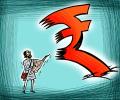
Indian rupee, which earlier this week touched an all-time low, is likely to remain under pressure and may test new levels as a fallout of the US Federal Reserve indicating more interest rate hikes, experts said. The aggressive rate hikes will dampen demand and increase the possibility of a recession in the US. This could accelerate the pace of capital outflows, weaken the rupee and raise the threat of imported inflation.

In a recent article, Rajan has ridiculed critics of the exchange rate policy.

The finance ministry is in favour of extending the August deadline for public sector banks (PSBs) as well as insurance companies to increase their minimum public shareholding (MPS) to the mandated 25 per cent, said a senior government official. "The election results will determine the course of action. "Most likely, those who did not receive an extension to meet the minimum shareholding norm will be granted one," the senior government official said.

Based on the current momentum, the funds likely to be raised through the RBI's relaxed window would be $3.5 billion-$4 billion.

The Reserve Bank will go for a "dovish pause" at Wednesday's policy review announcement amid developments such as a rise in inflation, government maintaining the inflation target band and a likely impact on growth due to local lockdowns on rising COVID-19 infections, analysts said on Monday. Economists at American brokerage Bofa Securities said price stability, growth and financial stability will become the prime focus areas for the central bank going forward. "The RBI MPC (Monetary Policy Committee) should deliver another dovish pause on Wednesday," it said. The policy announcement, the first for the fiscal, will come days after the government maintained the RBI's target to ensure inflation to be within 2-6 per cent band for five more years.

Indian Oil Corporation (IOC) on Tuesday reported halving of its March quarter net profit largely because of losses in the petrochemical business and shrinking margin after it announced a pre-election fuel price cut despite rising input costs. The net profit of Rs 4,837.69 crore in January-March compared to Rs 10,058.69 crore a year back and Rs 8,063.39 crore in the preceding October-December quarter, according to a stock exchange filing by the company.

Average policy rate over the next three years should be around 7.4%
India decisively withstood global headwinds in 2023 and is likely to remain as the world's fastest-growing major economy on the back of growing demand, moderate inflation, stable interest rate regime and robust foreign exchange reserves. Despite widespread pessimism witnessed among the developed nations and the worsening geopolitical situation, India recorded a gross domestic product (GDP) expansion of 6.1 per cent in the March quarter. The growth moved up to 7.8 per cent in the June quarter and was 7.6 per cent in the September quarter. For the first six months of this fiscal, the growth was 7.7 per cent.

'While Indian markets are indeed not inexpensive, the valuations of largecap stocks are still a considerable distance from being overstretched.'

Larsen & Toubro, Axis Bank, Reliance Industries, UltraTech Cement, Mahindra & Mahindra, IndusInd Bank, ICICI Bank and Tata Steel were the other big gainers. Sun Pharma, HCL Technologies, Asian Paints, Nestle and Infosys were the laggards.

Among the Sensex firms, ITC, Kotak Mahindra Bank, ICICI Bank, Nestle, Axis Bank, IndusInd Bank, UltraTech Cement, Bajaj Finance, Maruti and HDFC Bank were the major laggards.

The government on Monday ruled out making public the RBI report detailing the reasons why the central bank could not keep inflation within the targeted 6 per cent upper limit for the three consecutive quarters. "Yes sir, RBI has furnished a report to the central government, as mandated under Section 45ZN of the RBI Act, 1934 and Regulation 7 of RBI Monetary Policy Committee and Monetary Policy process Regulations, 2016," minister of state for finance Pankaj Chaudhary said in a written reply. The said provisions of the RBI Act, 1934, and regulations therein does not provide for making the report public, he said.

The 8.1 per cent interest rate was recommended by the Central Board of Trustees after its meeting in Guwahati under the chairmanship of Union Labour and Employment Minister Bhupendra Yadav, a labour ministry press statement said.

Among the Sensex firms, Tech Mahindra, Tata Motors, Infosys, Wipro, Tata Steel, Tata Consultancy Services, Reliance Industries and Axis Bank were the major gainers. Bajaj Finance, IndusInd Bank and Power Grid were the laggards.

Mukesh Ambani, the patriarch of Reliance Industries (RIL), and Gautam Adani, the chairman of Adani Group of companies, have secured the top positions on the Fortune India Rich List, created in partnership with Waterfield Advisors, with respective wealth of $99.7 billion and $63.71 billion. With a wealth of $34.6 billion, the Mistry family of Shapoorji Pallonji Group holds the third position on the list, while the Poonawalla family, owners of vaccine maker Serum Institute, with a wealth of $32.9 billion, stands fourth. Stockbroker and founder of D-Mart-branded grocery stores, Radhakishan Damani, claims the fifth spot on the India Rich List with a wealth of $23.4 billion
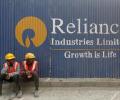
Weighed down by the oil-to-chemicals (O2C) business, Reliance Industries (RIL) results for the April-June quarter (Q1) of 2024-25 (FY25) missed Street estimates. A 14 per cent fall in the O2C segment's operating profit compared to the year-ago quarter and a 22 per cent sequential decline pulled down the consolidated performance. The O2C segment accounts for a third of the overall operating profit and about 60 per cent of the attributable consolidated profit.

'Rather than cutting and pasting from advanced economies, we should use basic economic principles to think about what is right for India at the stage of development at which we are,' says Chief Economic Advisor Krishnamurthy Subramanian.

Commodity investments can help you diversify your portfolio in asset classes other than equity and debt, says Dwaipayan Bose.

The currency market won't care for our moans, groans, cries and sighs. The rupee will find its own level, explains Tamal Bandyopadhyay.
Since January 1, the rupee value has fallen by 5.5 per cent against the US dollar and touched life-time low of 58.98 on Tuesday.

He finished a stellar T20 International career, registering the record for most by runs any player in T20 World Cups -- 1,292 runs in 35 matches.

From the Sensex basket, JSW Steel, Tata Steel, UltraTech Cement, NTPC, Larsen & Toubro and HDFC Bank were the major gainers. Titan, Nestle, Bharti Airtel and IndusInd Bank were among the laggards.

Longer-tenure FDs generally give higher returns. Nonetheless, going for a tenure higher than two to three years is not advisable.

'The Budget needs to focus more on social welfare schemes.'
